Waterproofing Basements
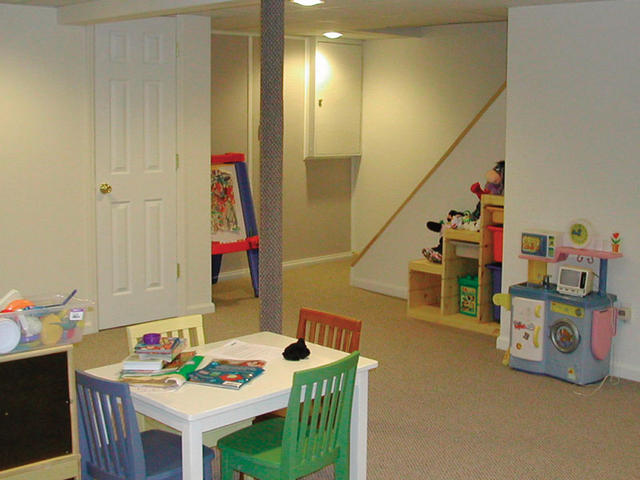
Almost everyone could use more living space. But square foot—the average cost of construction nationwide for new and existing homes—it is worth looking into unfinished space you already own, like the basement. You can make it fancy or just functional, a home theater or a home office. But step one in every remodeling scenario is the same: It has to be dry.
That’s easy enough to accomplish above ground. It’s tougher downstairs because
puddles in the yard and water draining from the roof inevitably head for that big hole in the ground under your house. Without thorough protection, particularly in a waterfront home, basements can quickly turn into swimming pools.
Outdoor water protection
Several so-called waterproofing systems are really leak collection systems that only deal with water once it’s inside. That may be fine in a rough space housing appliances, some storage and a heavyweight dehumidifier. But chugging sump pumps and dripping interior drains don’t fit too well in a new family room. If you want a basement dry enough to be finished living space, don’t fight the water battle inside. Deal with water outside in the yard before it gets to the house. There are several ways to do it. Some are easy homeowner projects. Others—like the first two options listed below—involve so much earth moving that even diehard DIYers will need a landscaping or general building contractor with excavation equipment.
Dig a dry well. Installed mainly on flat sites, a dry well builds more water-holding capacity into the yard. The idea is to dig a big hole and fill it with rocks, gravel and other porous materials to create a hidden reservoir. The bigger the hole, the more water the yard can handle. Dry wells often don’t work well on sites with dense clay soil or a high water table, for instance, near a lake or stream at almost the same elevation as the house. In plain language, if you dig a shallow hole and it immediately fills with water, digging a deeper hole isn’t likely to help.
But a dry well that’s five or six feet deep and four or five feet across will add considerable drainage capacity—often enough to handle the flow from downspouts in heavy rains that otherwise would overwhelm basement walls.
Install an area drain. This method is used mainly on sloping sites to keep water from reaching the house. The idea is to intercept the flow and funnel it to a safe release point where water can’t flow back against the building. The drainage trench should be installed on the high side of a sloping site near the edge of the property instead of close to the house. Construction can vary depending on the type of soil and amount of water needed to be diverted.
Every area drain has two basic components. First is a gravel-filled trench often four feet deep or more and several feet wide. The gravel is so porous that water in and on the ground drops into the trench instead of toward the house. In the trench, water flows into the second basic component: perforated drainpipes set on about six inches of gravel and sloped slightly to the release point. To conceal an area drain (or dry well), stop the gravel fill a few inches short of the surface, cover with a double layer of filter fabric and then sod. The tough mesh fabric lets water drain through, but it filters out most of the silt that can eventually clog the system.
Grade at the foundation. Decrease the amount of water trapped near the foundation by filling in gullies around the house. Better yet, add enough soil to create a gradual slope that helps conduct water down and away from the building, even if it’s only for a few feet.
Drain from a downspout. To reduce water-trapping erosion at the foundation, diffuse the flow from downspouts by emptying them onto splash blocks. Another option is a perforated drain hose that extends from the downspout to dribble water onto the ground away from the building. Some of these diffusers are spring-loaded and automatically roll up out of the way when it’s not raining.
Extend a downspout. Connect elbows to the ends of downspouts and add several feet of straight pipe to deposit roof water farther away from the house. You can install underground pipe systems to carry away the water, or simply lay sections of downspout on the ground to bypass the foundation on a sloping site.
Patch foundation cracks. Inside and out, close cracks in poured concrete or block foundations with hydraulic cement. Scrape debris from the crack and force in the cement, which swells slightly as it hardens to fill small voids. The cement works even if the crack is wet.
Recoat the foundation. The most costly project of last resort—but also the most foolproof way to make a wet basement dry—is to re-excavate and waterproof the foundation. Houses even 20 years old shouldn’t need this work. But waterproofing has come a long way: it used to (and sometimes still does) consist of hot tar slopped over the masonry before back-filling with dirt—a simple system that works well for a few years. Now there are several modern systems that work better and last longer. Many use sheets of rugged, rubberized matting applied to the foundation over an asphalt adhesive base. Some of the most thorough systems top that protection with porous panels that allow water to enter and then drop down to the footing into collection pipes before it ever comes in contact with the waterproofed wall.
