Grandfather Clocks as Monumental Examples
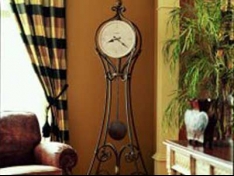
Traditionally, grandfather clock consists of the following basic parts: the pedestal, cabinet and head; the upper compartment of the clock, where the dial and mechanisms are located.
The French were famous watchmakers. Their clocks didn’t strike with their monumentalness, but admired with their beauty and unique design. For the finishing they used gilding, complex carving and a lot of extra embellishments.
British craftsmen on the contrary tried to focus on “large forms”. Their clocks had impressive sizes: 2-2,5 m and their structure looked like a tower.
It seemed as if they embodied three main ideas: conciseness, elegance and grandeur.
Besides the basic function (showing times), clocks were wonderful decoration of the house and the unique entertainment of its master. With melodic battle they violated the customary silence of the room and created unique atmosphere. The large size of the clocks allowed to place inside the machine, which made the figures move in the arch above the dial.
The golden age of English watchmaking came in 1658 when Christian Huygens invented the pendulum controller. “Home chapels were created due to it. Tall and free-standing… They were impressive and monumental examples of English style.
Nowadays, the popularity of grandfather clocks lessened. They can now be seen only in museums or private collections. Even today we can meet the true judges who are ready, for a large sum, to purchase a great masterpiece of the famous master.
